A coffee roastery: a store whose cart remembers what you chose
A small online store with eight products. For almost every coffee you pick the weight, for every one the grind, and the price depends on the weight. The cart lives on between visits: close the tab in the evening, open it in the morning and the choice is still there.
Eight products
do not need a big platform.
But the cart, the weight, the grind and free shipping over a set amount have to work exactly as they do in a big store.
- A catalog with a filterEight coffees, filtered by what they are for: espresso, filter, all-purpose, decaf. Each one with its country and tasting notes, most with the altitude too.
- Weight and grind250 or 1000 grams, six grind options from whole bean to Turkish. The price changes with the weight.
- A cart that remembersIt is kept in the browser between visits. When it opens it checks itself and throws out anything that does not match the catalog.
- Free shipping over a set amountThe cart itself shows how much is left to add. The cheapest way to raise the average order value.
- A coffee subscriptionThree plans of different size and frequency, at different prices. For a roastery that means a steady flow of orders instead of spikes.
- Wholesale for cafesA separate form with a request for samples. Retail and wholesale are not mixed into one request.
The screenshots are taken
from the live site.
First screen
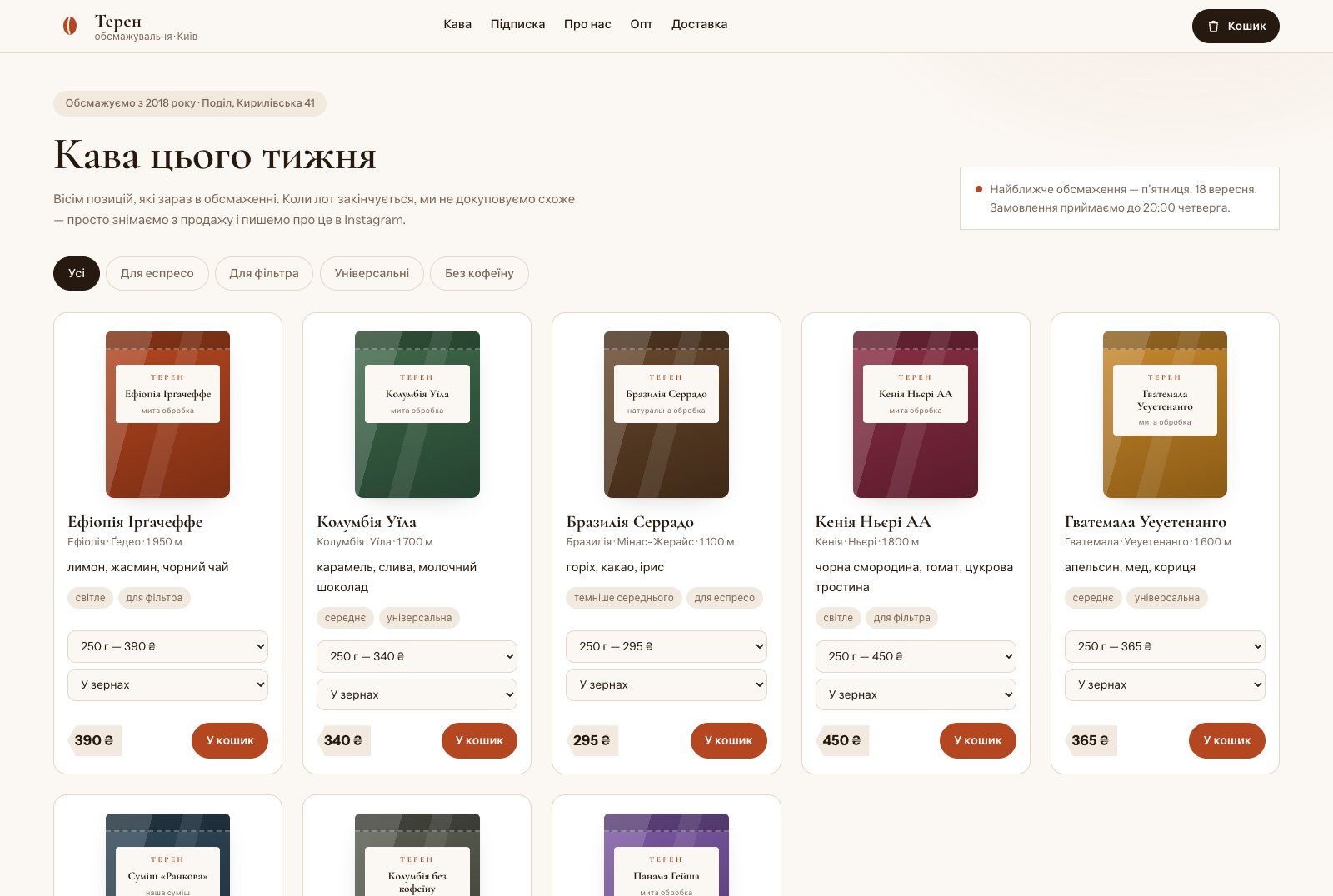
The first screen is the shelf itself: bags, prices, the choice of weight and grind, “add to cart”. On the right, the date of the next roast, counted from today.
The subscription
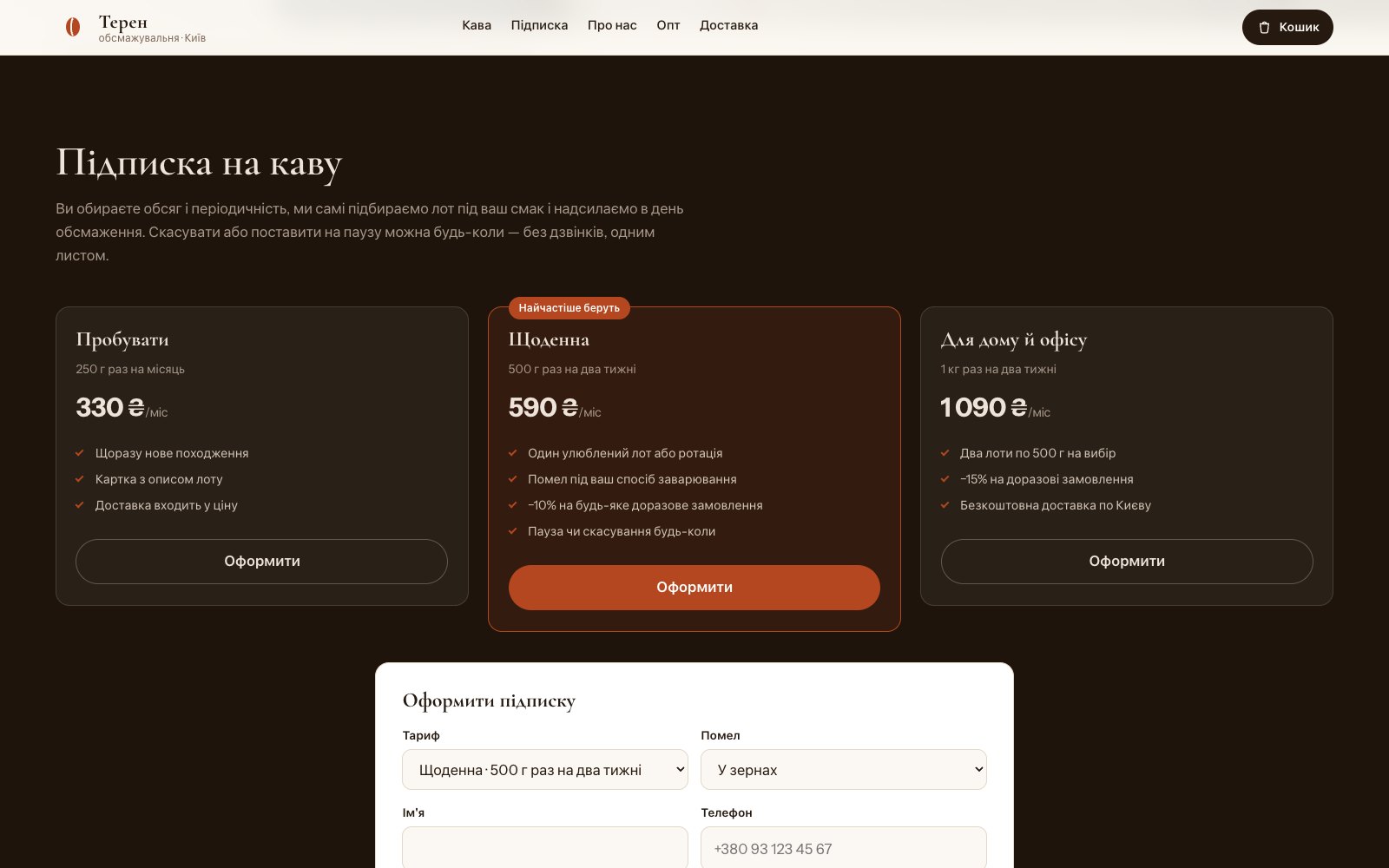
Three sizes: 250 g once a month, up to a kilogram every two weeks. Each one says what is included, and separately that it can be put on pause with a single message, without phone calls. The “Subscribe” button opens a short form below the plans with that plan already filled in.
On a phone
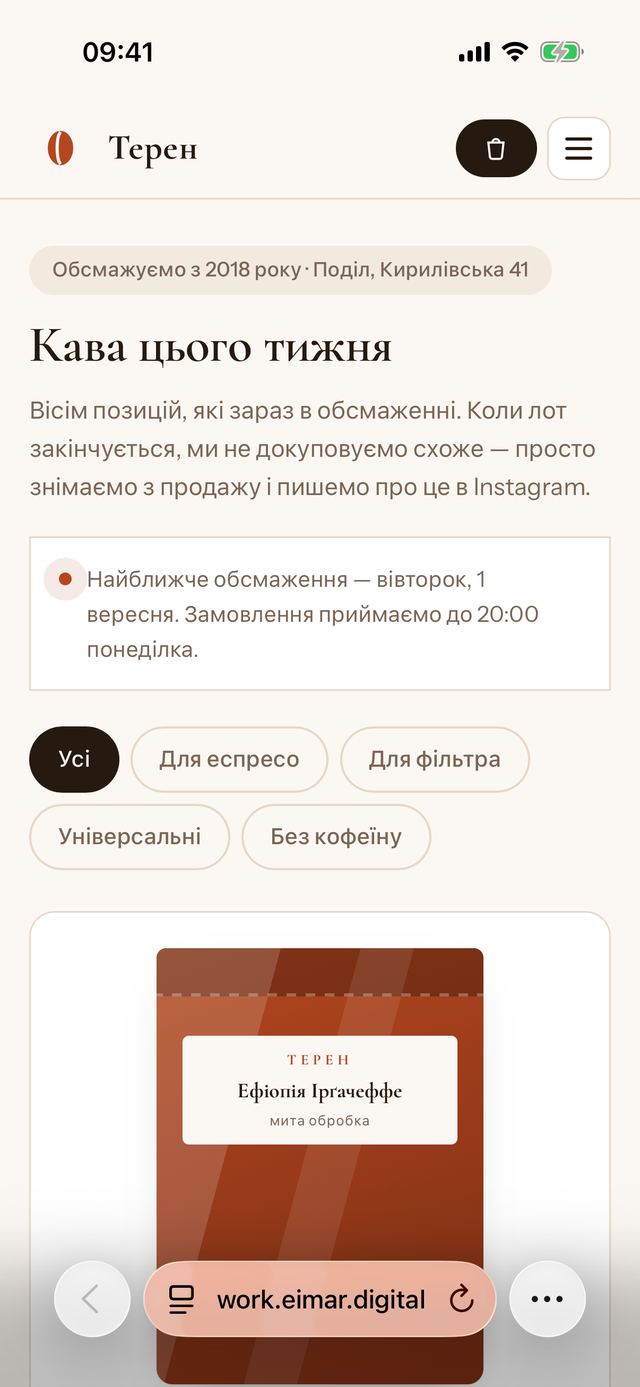
The cards go into one column, and the cart folds into a button with a counter in the header. The choice of weight and grind stays big enough for a thumb.
Coffee runs out every month,
and the whole store rests on that.
The cart lives between visits
Someone who closed the tab to think it over comes back to a finished order instead of putting it together again.
A subscription instead of a one-off purchase
The same customer brings money in all year instead of once. That is the main difference between a coffee store and a furniture store.
Weight and grind are different products
A kilogram of whole beans and 250 grams of Turkish grind have a different price and a different margin. The store does not lose money by selling everything at one price.
In the first six months after launch there were 20–30% more repeat orders.
We can do the same for your product
A store with ten or so products needs neither a big platform nor a subscription fee for one. Write and tell us what you sell and how many products you have.